
Originally published in portuguese in 04/10/2017 (versão PTBR)
Gamers Magazine, Nintendo World, EGM Brazil, Playstation Super Tips, NGAMER, Xbox Official Magazine, Game Master, EDGE and PlayStation Official Magazine.
If you paid attention to the authors of such publications, chances are that you stumble upon Fábio “Fabão” Santana and if you live in brazil, his name can bring back some memories.
In addition to having an astonishing resume and being a staple in Brazilian game journalism, Fabão accidentally became an encyclopedia about this vital industry that we love so much.
Those who have had the opportunity to talk to him know this a lot and, taking advantage of this notion, I decided to call him for a relaxed conversation. Of course, I wanted to absorb as much information as possible because I was interested in the area, but there is something specific about his recent activities that deserves to be openly discussed.
Let’s say that my three-hour conversation was a mix of biography, excerpts from the gaming industry, lecture on pixel resolution and digital preservation.
The 38-year-old from São Paulo started helping, together with his brother, the game collection at the VHS tape rental company in which his father owned. Due to his role, he always visited the headquarters of Pro Games, the largest network of rental companies in Brazil in the 90s. As a game fan, he rented a lot of material, but the main reason for the constant visits was the acquisition of new titles for the collection of rental store, commonly named ‘locadora’.
His first memory with video games was playing Atari at his cousin’s house and in arcades in bars in the region where he lives today. The real initiation in this universe begin when he won a Phantom System, a clone of the Nintendo Entertainment System, starting a great pilgrimage by the nearest locadoras in search of games.
Like many players of that time, Fábio paid attention to the cover art. The lack of knowledge of English, reduced the choice in which illustration was more interesting.
He mentions that a classic that lives in his mind, Power Blade, but quickly changes the subject after remembering the first contact he had with Mega Man 2.
“It was with Turbo Game from CCE, it was called ‘Rock Man 2’. There was a guy with a jacket that was on his back, he faces a monster that seemed to be made of liquid metal. The guy was getting ready to punch, as if he were going to fight ”, comments the journalist.
“I have no idea why it came out that way. The artist who received the briefing thought it was something related to Rocky, the fighter.”
CCE (Portuguese acronym for Commerce of Electronic Components) was a relatively famous electronics manufacturing company, which was eventually acquired by Lenovo in 2012.
In 1989 launched the Top Game on the market, another NES clone, with a difference: it accepted American and Japanese cartridges. As it swam in the sea of illegality, the cartridges had their own custom artwork that was just marvelous, be the nonsense art of Rock Man 2 or a messy collage of Castlevania.
It is with this naturalness that Fabão spills out small trivia about how the game industry do things back then that was unknown to me until now. It seems that his experience as a journalist added to his natural curiosity for the subject, giving some kind of magical power to him.
To prove it, just follow his instagram. It is like a small news newsletter with various stories, trivialities, new acquisitions from his collection or hot tips about a 3DO chip.
I don’t know about you, but all the information provided so far here is incredible for me. I am fascinated by these little anecdotes, it seems that I learn more and more about this universe that is not so widespread when compared to other creative fields.
Like the story behind The Portopia Serial Murder Case (1983), the first Japanese visual novel developed by the creator of Dragon Quest. It was never released in the West and served as an inspiration for Metal Gear designer Hideo Kojima to enter the industry.
Fábio’s sharing of these short stories was not the main reason I went after his ancient wisdom. Its vast collection of old games, especially the peculiar collection of Sega Saturn, was what attracted me.
Casually, the journalist had been collecting relatively important pieces in his collection since the time he was a critic for magazines. He highlights the Japanese versions of Final Fantasy 7, Lunar: Silver Star Story Complete with the Movie Card for Sega Saturn and the Japanese version of the port of Castlevania: Symphony of the Night, also for Saturn.
It was in the middle of 2008 that he started to invest, when he researched some auctions of lots of Japanese games. The best way to get rare titles is to import directly from Japan, especially if you want to have all Japanese games released by Capcom for Sega Saturn.
This research resulted in the console bundle with several games, including a small jewel: Street Figther Zero 3. Looking further, the title in question costs an average of US $ 350 dollars and the lot came out for a simple US $ 60.
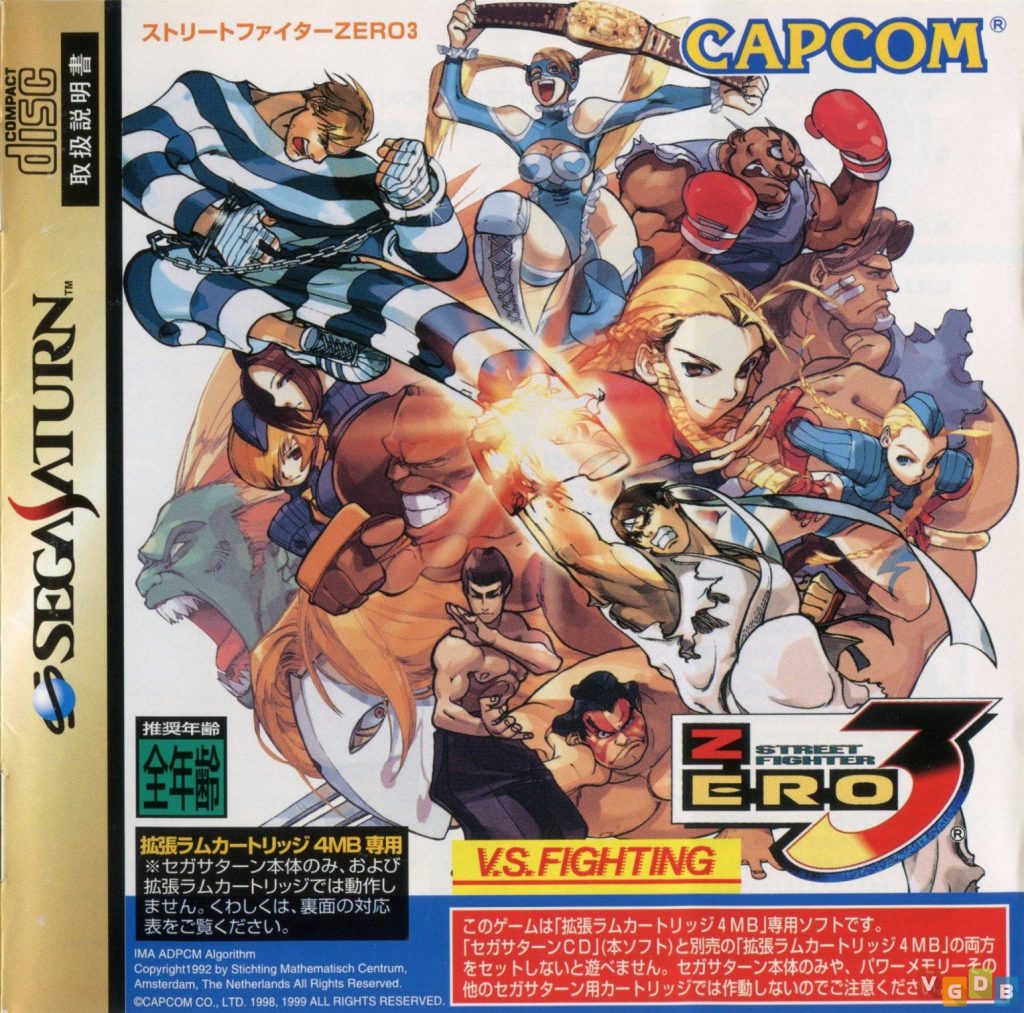
“Most of the time they don’t list the content. Whether in the description or in the title of the auction itself, to find out what games are included and the status [of games and consoles] is up to the photos”.
Fabão, on the technique he developed over time.
As of this moment, only three titles were left to complete the collection of games released by Capcom: Rockman 8 ~ Metal Heroes, Dungeons And Dragons Collection and Final Fight Revenge.
Observing this appreciation of Saturn, I wanted to understand why the console was not so successful. Fabão explains to me that the launch of Final Fantasy 7 in 1997 was extremely important in extinguishing the shine of the Sega machine.
At the time, Sony was already a renowned electronics company and its entry into the industry was somewhat unusual. Until then, Square was in the production phase of the next Final Fantasy for any platform that Nintendo developed.
The Nintendo 64 was still in the prototype phase, but it was already known to several companies that would use cartridges. It was not a good one for Square, as it wanted to bet on three-dimensional graphics that would not fit inside a cartridge.
Still, they were willing to come up with a solution to put the game on the console. Sony was very open, showed what they were developing and asked if there was interest, regardless of Square’s relationship with Nintendo.
The PlayStation proved to be perfect for rendering the proposed graphics and Final Fantasy 7 was born. In addition, Sony also managed to score several titles for its platform, proving to be more friendly in the negotiations.
It was a big risk at the time for putting Nintendo and Square’s relationship in check, causing enormous discomfort between the two. Fábio himself wrote a little about it when he explained the importance of Cloud in Smash Bros. for Nintendo Wii U. Polygon’s special piece on the twenty years of Final Fantasy 7 explains in more detail how development started.
Sega missed the opportunity, which is pretty funny if you pay attention. The Dreamcast, which was also not so successful, generated several bizarre and creative experiences such as Sega Gaga, Jet Set Radio, Space Channel 5, Seaman, Crazy Taxi, Shenmue and ChuChu Rocket.
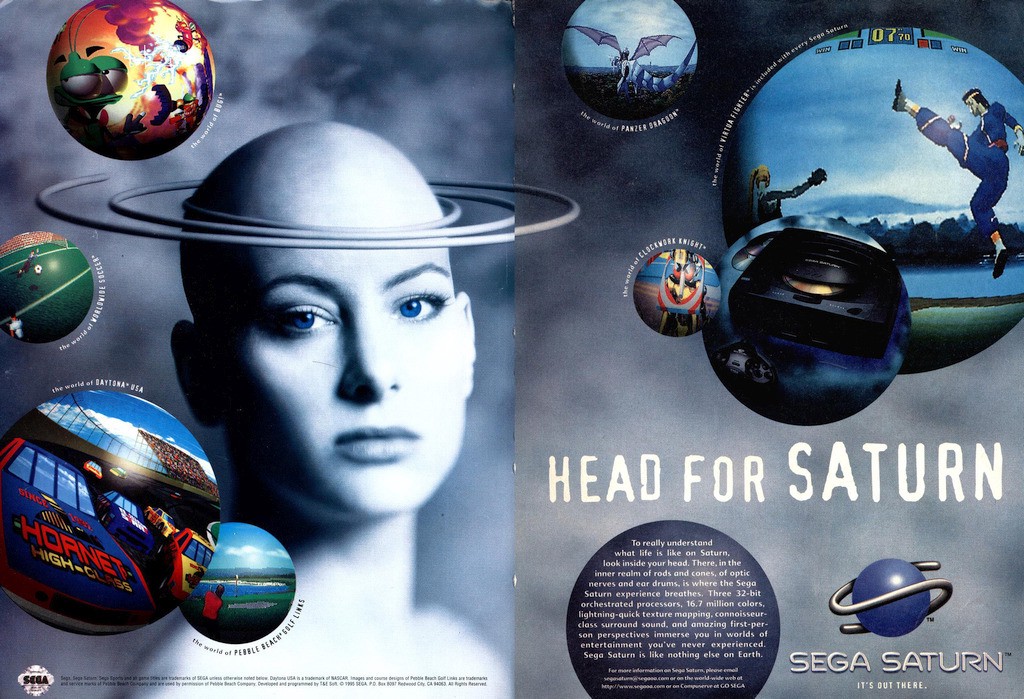
When the next console arrived, only Panzer Dragoon and Nights Into The Dreams created a buzz and the rest of the titles are still unknown to the Western audience as the vast majority have never been translated from Japanese.
While the PlayStation demonstrated a more modern concept, with high performance in rendering 3D graphics, the Saturn was basically a slightly powerful arcade machine. Although it also generated three-dimensional images, it’s focus was on faithful reproduction of graphics in two dimensions. That’s why much of it’s catalog is filled with fighting games.
“Saturn has a charm that deserves to be known by more people, so I am happy to help spread the word.” Fábio comments and adds the fact that the console has a wide range of fighting and RPG games, some of his favorite genres.
With a sizable collection in hand, he began researching how to make old consoles run in modern machines. That’s how I wanted to fall into this rabbit hole.
“If you like it and are satisfied with the way you play at the moment, keep it up. Trying to reproduce these old games in high definition is a bottomless pit ”, comments the journalist.
It is a crucial tip, the result is impressive, but getting there is an arduous journey.
The plot thickens when you realize that most modern television sets cannot faithfully transmit the low resolution of 240p. You can simply end this problem by connecting an old console, like the NES, to a CRT television.
Hence another problem: most old televisions no longer have technical support available and keeping them running for an extended period is not so worth it.
When we put an old console on a modern television, we have the famous upscaling. It increases the resolution from 240p to 1080p and on each device it will be different due to the internal algorithm of each brand. As a rule, the technique used is made for films and does not work as well when we talk about video games.
“The need for upscale for film is different, it benefits more from an upscale that leaves the image blurry. In the case of a game, mainly 2D, going through this same technique does not have the same result, messing up the image.”
The most famous device for that is the Framemaister. It accepts all connections used by old consoles and what will really decide the final quality is the cable used. If we go deeper, it gets pretty complicated, I wouldn’t be able to explain it in the best possible way.
That’s because each console is a different beast, each with its own particularity. A quick example is the fact that the NES is not able to transmit in RGB natively, having to resort to a customized card for this to happen.
There is also the fact that modern televisions do not support quality below 480i, a common resolution that DVD players use. Most of these consoles operate with 240p, which makes it difficult for what was not so easy.
What upscaling devices do, like Framemeister, is to deliver condensed content to the TV. They do the heavy lifting, taking the original image and switching to the digital signal without serious distortions, preserving every possible pixel.
“You can see that the images are more blurred”, comments Fábio about the comparison he made about Final Fight 2 from Super Nintendo. “In this direct connection, the TV algorithm makes an average of the adjacent pixels. It is not committed to faithfully reproducing the original resolution, generating new pixels. They are constructed as if they were a gradient, between the transition the pixels become a smoother transition, generating this blur.”
The bottom images show the best quality. In this case, the one who performs the upscale is the Framemeister, preserving the purity of each pixel. Here, the color transition between adjacent pixels is as sharp as possible.”
Unfortunately, Micomsoft discontinued Framemeister in 2016, with the last batch coming out in February this year.
There are still other similar producers on the market and the likelihood of a successor emerging is there. But what remains for the future of digital preservation, in keeping digital games alive and playable?
“What makes me very happy, in addition to the advance in emulation, is the development in hardware simulation through FPGA.”
I didn’t expect you to be surprised at new information even near the end of the conversation. And soon I was briefly introduced to what may be the future of digital preservation.
“FPGA (Field Programmable Gate Array,) are processors that can be programmed to act like any other processor” explains Fábio, “they simulate the original hardware, with a commitment to reproduce the way in which they processed timing, frequency and etc.”
Translating into proper english, FPGA platforms can be the replacement for old consoles when they eventually stop working.
RetroUSB’s AVS and Analogue NT Mini are basically NES built with modern tools. That is, they can play games in high definition directly from the console, have wireless controls, have USB output and customized menus for different resolutions.
While the AVS is the most affordable, the NT Mini is a luxury item. In addition to costing US$400, it is compatible with the entire NES and Famicom library, and also includes all accessories, even the Famicom Disk System.
It was just three hours of conversation and I feel like I just came out of an intensive course about a not so explored subject about those who talk about games.
“It is a very necessary effort. As a journalist, I have always cared about the preservation of information itself. Any form of knowledge that is produced is necessary for memory. ”
The future is promising, luckily there are already people and groups that care about this issue, building something interesting.
At the moment, we have two large non-profit organizations that are concerned with preserving the culture of digital games.
The Video Game History Foundation, is a digital archive library with the ultimate goal of creating a fully organized collection of various industry materials. They want to make it available to researchers, historians and as an educational resource for the public.
The Game Preservation Society, on the other hand, wants to encourage research into methods of preserving electronic games. In NHK’s Inside Lens series, the organization’s operation is shown in more detail. We see, for example, the process of restoring the DECO Cassette System to run The Tower (1981), which was taken to be digitized and archived.
It is a dense subject, but no less important, perhaps it is the most important if we look at the cultural aspects of this industry. Knowing the struggle of faithfully running old consoles and discovering the world of FPGA systems makes me excited to try to be a part of it.
May this little tour we have be of any use to arouse interest in the subjects covered.
In the meantime, I’m going to try my luck at Japanese auctions.